


More than half of all searches on Google now end without a single click, 68.01% as of early 2026 on one major tracking panel (SparkToro, less than one third of Google searches still send a click, 2026). A growing share never reach a traditional results page at all: they end inside an AI answer. If you plan content, track rankings, or report on organic performance, the numbers that mattered in 2023 no longer describe what is happening today.
This page collects 129 AI search statistics for 2026, each traced back to the organisation that measured it: Google, OpenAI, Microsoft, Meta, Pew Research Center, Ahrefs, BrightEdge, Cloudflare, Similarweb, Adobe, Orbit Media, IAB, and others reporting their own surveys, panels, or platform data. Several widely repeated “AI search” numbers do not hold up against their own cited source; where that happened, the correct figure replaces it, with a note.
Use the key takeaways below to find a number fast, or read each section for context: AI search adoption, AI Overview frequency, click impact, citation behavior, crawler blocking, and where the practitioners who track it expect it to go next.
Key takeaways
- Google’s Gemini app passed 1 billion monthly active users in August 2026, up from 950 million the month before (Google, Gemini app announcement, Aug 2026).
- OpenAI reports more than 50 million consumer ChatGPT subscribers (OpenAI, Scaling AI for everyone, Feb 2026).
- Google’s AI Overviews reach more than 2.5 billion monthly active users (Google, controls for website owners, Jun 2026).
- In Pew Research Center’s own March 2025 browsing-panel study, 58% of respondents had at least one search produce an AI-generated summary that month (Pew Research Center, metered-data AI report, May 2025). Counted per search rather than per person, the same Pew panel shows 18% of Google searches that month produced an AI summary (Pew Research Center, clicks on Google AI summaries, Jul 2025).
- When an AI summary appears on a Google results page, users click an external link 8% of the time, versus 15% of the time when no summary appears (Pew Research Center, clicks on Google AI summaries, Jul 2025).
- An AI Overview correlates with a 58% lower average click-through rate for the page ranking first, up from 34.5% in an earlier study on the same panel (Ahrefs, AI Overviews reduce clicks, Dec 2025).
- ChatGPT’s share of worldwide website referral traffic reached an all-time high in May 2026, tracked across 101,574 websites (SE Ranking, ChatGPT referral traffic report, Jul 2026).
- 54.5% of AI Overview citations now come from pages that also rank organically, up from 32.3% sixteen months earlier (BrightEdge, rank overlap after 16 months of AIO, Sep 2025).
- Cloudflare’s own crawler data shows GPTBot’s share of AI-crawler traffic jumped from 5% to 30% in a year, while Bytespider’s share collapsed from 42% to 7% over the same period (Cloudflare, from Googlebot to GPTBot, Jul 2025).
- Of the domains in the top 10,000 with a readable robots.txt file, about 14% had a rule specifically targeting AI bots as of June 2025 (Cloudflare Radar, cited in the same report, Jun 2025).
- In its own survey, IAB found 72% of AI-using respondents use AI tools at least weekly and 40% daily, and 95% of the publishers it surveyed report a meaningful impact from AI-driven discovery (IAB, AI adoption and publisher impact study, 2026).
- Google Search and other revenue grew 19% year over year, to $60.4 billion, in the quarter ended March 31, 2026, which Alphabet ties explicitly to AI features lifting query volume. Alphabet’s total Google Services revenue for the same quarter was $89.6 billion, up 16% (Alphabet, Q1 2026 earnings release, Q1 2026).
| Stat | Source | Date |
|---|---|---|
| Gemini app: 1B+ monthly active users | Aug 2026 | |
| ChatGPT: 50M+ consumer subscribers | OpenAI | Feb 2026 |
| AI Overviews: 2.5B+ monthly active users | Jun 2026 | |
| 18% of Google searches produced an AI summary | Pew Research Center | Jul 2025 |
| AI summary present: 8% external-link CTR, vs 15% without | Pew Research Center | Jul 2025 |
| Top result CTR: 58% lower with an AI Overview | Ahrefs | Dec 2025 |
| ChatGPT referral-traffic share: all-time high | SE Ranking | Jul 2026 |
| 54.5% of AI Overview citations also rank organically | BrightEdge | Sep 2025 |
| GPTBot’s AI-crawler share: 5% to 30% in a year | Cloudflare | Jul 2025 |
| ~14% of top-10,000 robots.txt files target AI bots | Cloudflare Radar | Jun 2025 |
| AI tool use: 72% weekly, 40% daily | IAB | 2026 |
| Search and other revenue: +19%, to $60.4B | Alphabet | Q1 2026 |
How many people use AI for search now?
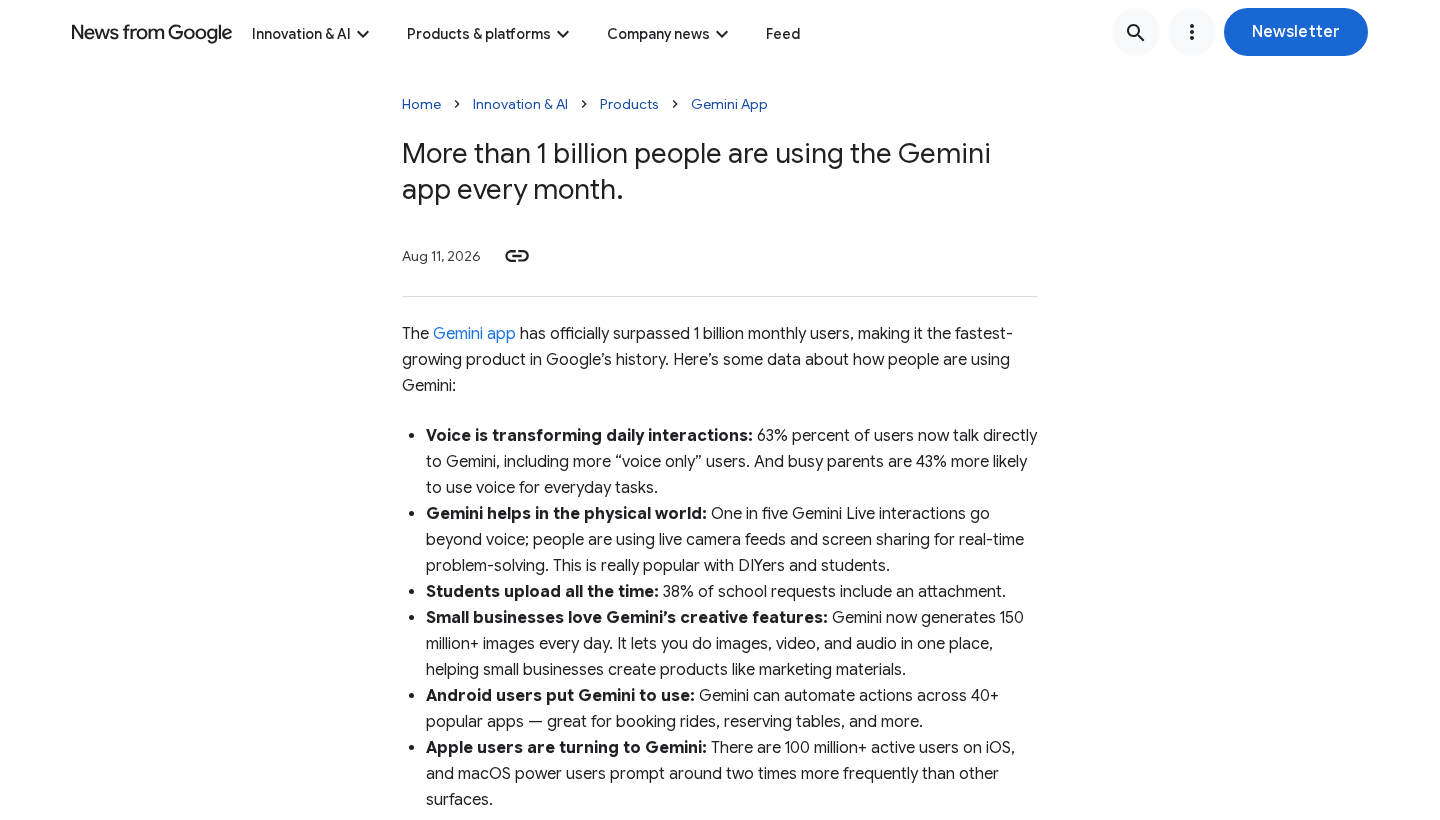
Google’s own announcement of the Gemini app reaching 1 billion monthly active users. Source: Google, Aug 2026. Screenshot of the source page, captured 4 November 2026.
Each company reports its own user numbers on its own schedule, using its own definition: “weekly active,” “monthly active,” and “query count” are not the same measurement. Treat every figure below as that one company’s own number, for that one metric.
How many people use ChatGPT, Gemini, Copilot, and Perplexity for search-like queries
OpenAI reports ChatGPT has more than 50 million consumer subscribers as of February 2026 (OpenAI, Scaling AI for everyone, Feb 2026). Google’s Gemini app passed 1 billion monthly active users in August 2026, up from 950 million the month before (Google, Gemini app announcement, Aug 2026). Microsoft’s first-party family of Copilot products surpassed 150 million monthly active users in its fiscal 2026 first quarter, the quarter ended September 2025 (Microsoft, FY26 Q1 earnings conference call, Sep 2025).
Bing’s own monthly active users reached 1 billion for the first time by Microsoft’s fiscal 2026 third quarter, ended March 2026 (Microsoft, FY26 Q3 earnings conference call, Mar 2026). Meta’s Mark Zuckerberg stated on the company’s Q3 2025 earnings call that Meta AI has more than a billion monthly actives (Meta Platforms, Q3 2025 earnings call transcript, Q3 2025).
In Orbit Media’s own annual survey of 1,110 US respondents, run with QuestionPro, ChatGPT is used regularly by 36% of respondents in both 2025 and 2026, holding flat as the most-used AI chat tool (Orbit Media and QuestionPro, AI vs Google survey, 2026). In the same survey, Google Gemini’s regular-use share grew from 29% to 33% year over year, the largest gain of any platform in the survey (Orbit Media and QuestionPro, AI vs Google survey, 2026). Microsoft Copilot’s regular-use share fell from 18% to 15% over the same period, the largest drop of any platform measured (Orbit Media and QuestionPro, AI vs Google survey, 2026).
How fast AI-search usage is growing year over year
In the same Orbit Media survey, 72% of respondents now use AI at least once a day, up from zero percent three and a half years earlier (Orbit Media and QuestionPro, AI vs Google survey, 2026). The share who use AI chat tools many times per day rose from 34% to 38% over the same year (Orbit Media and QuestionPro, AI vs Google survey, 2026). 55% of respondents now use AI chat as their primary or frequent research tool, combining “almost always” and “usually” answers, while only 16% say they almost always use a search engine for research in both years measured (Orbit Media and QuestionPro, AI vs Google survey, 2026).
SparkToro’s own analysis of AI tool adoption found more than 20% of Americans are now heavy users of AI tools, defined as ten times a month or more (SparkToro, new research on US AI tool adoption, 2025). The same analysis found nearly 40% of Americans use an AI tool at least once a month (SparkToro, new research on US AI tool adoption, 2025). Despite that growth, 95% of Americans still use a traditional search engine every month, so AI use looks additive so far rather than a direct replacement (SparkToro, new research on US AI tool adoption, 2025).
Pew Research Center’s own February 2026 survey of 5,119 US adults found 44% report using ChatGPT, up from 34% in 2025 (Pew Research Center, Americans and AI 2026, Jun 2026). Similarweb’s own tracking shows ChatGPT’s share of worldwide generative-AI website visits fell from about 76% in June 2025 to roughly 53% by May 2026 (Similarweb, AI search stats in 2026, 2026). Over the same period, Gemini’s share of those visits rose from under 9% to around 27 to 28% (Similarweb, AI search stats in 2026, 2026).
Claude’s share rose from barely 2% to close to 9% over the same period, evidence that usage is spreading across more assistants, not consolidating on one (Similarweb, AI search stats in 2026, 2026).
What share of Google searches show an AI Overview?
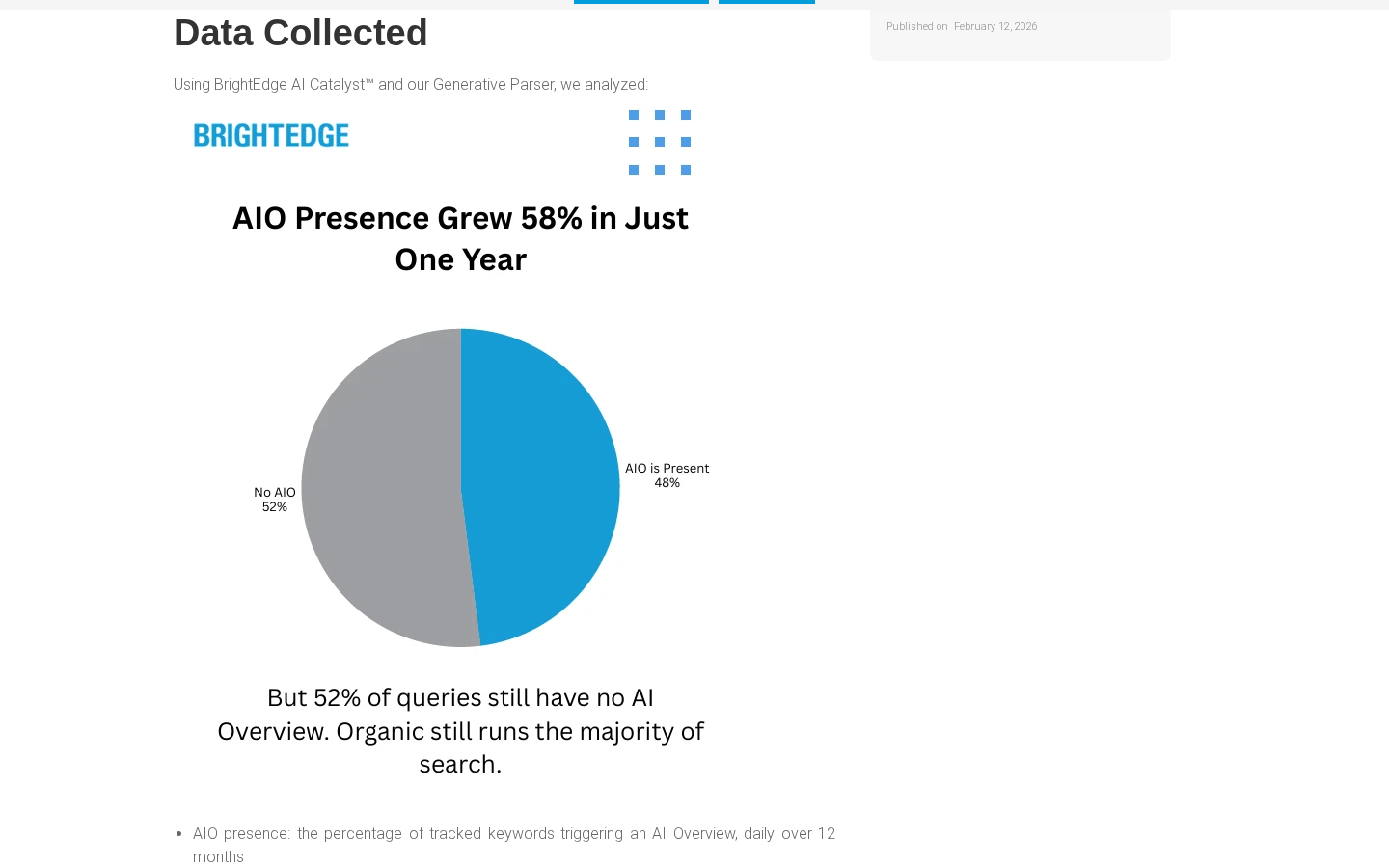
BrightEdge’s own month-by-month tracking of how often an AI Overview appears on the queries it monitors. Source: BrightEdge, Feb 2026. Screenshot of the source page, captured 4 November 2026.
Google reports global reach across all surfaces; Pew measured actual browsing behavior in a US panel. Both are useful, neither substitutes for the other.
What share of Google searches generate an AI summary
In Pew Research Center’s own metered-browsing-panel study of US adults in March 2025, 58% of respondents had at least one of their searches produce an AI-generated summary that month (Pew Research Center, metered-data AI report, May 2025). The 18% figure that circulates online measures something else: Pew’s July 2025 analysis of the same March 2025 panel found 18% of all Google searches produced an AI summary (Pew Research Center, clicks on Google AI summaries, Jul 2025).
Semrush’s own tracking study put the appearance rate at roughly 15.69% of all searches as of November 2025, up from 6.49% in January 2025, measured on Semrush’s own keyword panel, a different methodology from Pew’s panel and not directly comparable to it (Semrush, AI Overviews study, Nov 2025). On the same Semrush panel, informational queries made up 57.1% of the keywords that triggered an AI Overview, the largest share of any intent category (Semrush, AI Overviews study, 2025).
Commercial, transactional, and navigational queries made up 18.57%, 13.94%, and 10.33% of those AI Overview keywords respectively (Semrush, AI Overviews study, 2025). Separately, Semrush found Google Ads appeared on 25.56% of AI Overview results pages by October 2025, up from 5.17% in March 2025, a 394% increase over seven months (Semrush, ads on AI Overview SERPs, Oct 2025).
BrightEdge’s own tracked-query panel found AI Overview presence grew from roughly 30% to 48% of tracked queries over a year, measured to February 2026 (BrightEdge, AI Overviews at the one-year mark, Feb 2026). That is a 58% relative increase in a single year, on BrightEdge’s own panel (BrightEdge, AI Overviews at the one-year mark, Feb 2026). Google’s own AI Mode has surpassed 1 billion monthly active users since expanding globally in October 2025 (Google (Alphabet), Q2 2026 earnings remarks, Q2 2026).
The company also says AI Mode queries have more than doubled every quarter since launch (Google, AI Mode one-year insights, May 2026). A year earlier, Google stated AI Overviews were available in more than 200 countries and territories and 40 languages (Google (Alphabet), Q2 2025 earnings remarks, Jul 2025). The company also said the feature drives more than 10% additional query volume globally for the query types where it appears (Google (Alphabet), Q2 2025 earnings remarks, Jul 2025).
Which query types trigger an AI Overview most often
Semrush’s panel data above shows the clearest split: informational queries make up about three times as large a share of AI Overview keywords as commercial queries do. In Orbit Media’s own survey, 70% of respondents say they use AI summarization in search results at least occasionally (Orbit Media and QuestionPro, AI vs Google survey, 2026). The same survey found AI chat is preferred over search specifically for step-by-step instructions by 40% of respondents in both years measured, the single highest-preference category in the survey (Orbit Media and QuestionPro, AI vs Google survey, 2026).
60% of US adults in Pew’s own 2026 survey say they read the AI summary at the top of search results (Pew Research Center, Americans and AI 2026, 2026). Expect informational and how-to queries to carry the highest AI Overview exposure, and commercial or transactional queries the lowest: a pattern consistent across both Semrush’s and Google’s own reporting.
How much traffic do AI chatbots send to websites?
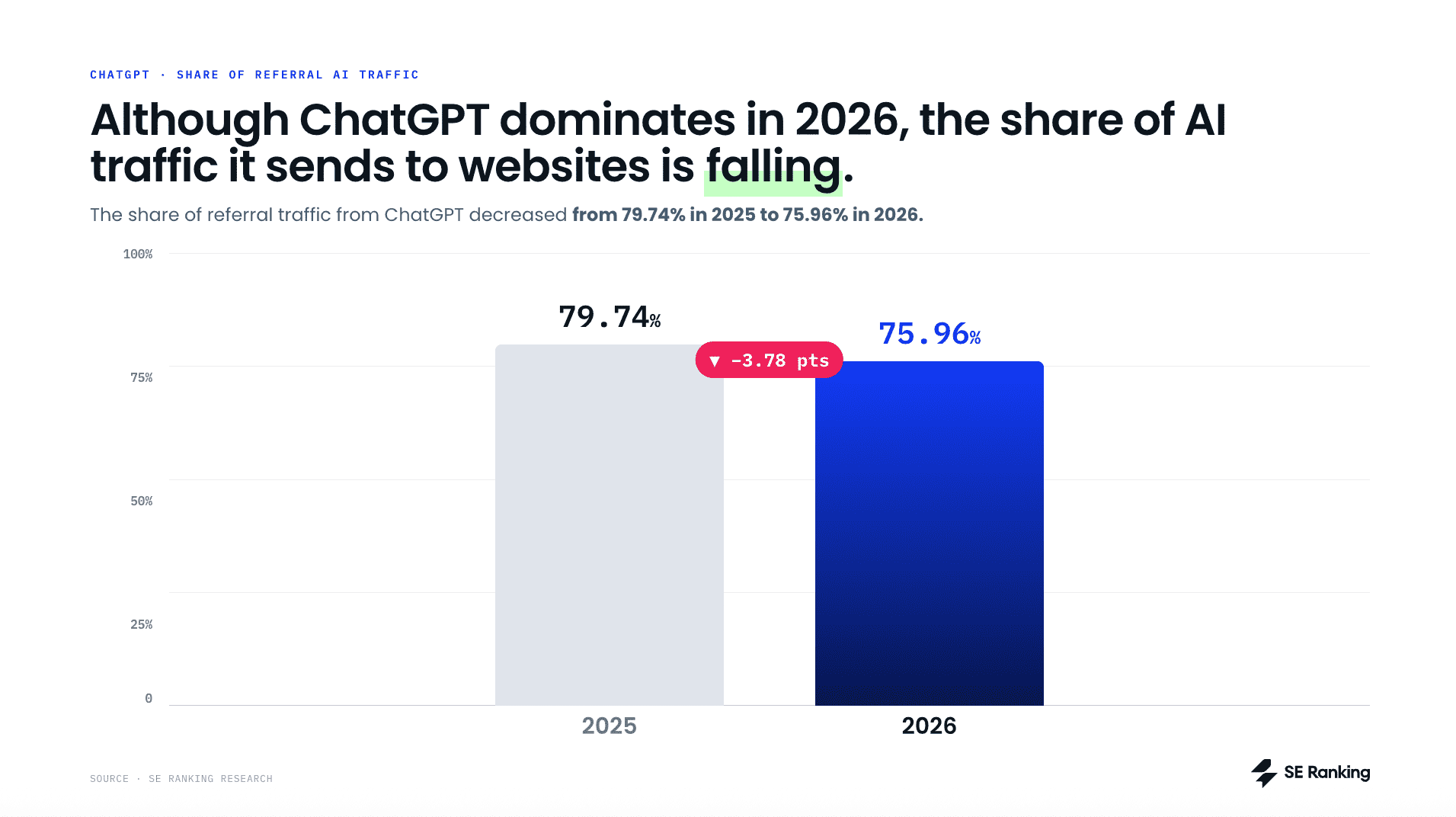
SE Ranking’s own tracking of ChatGPT’s share of worldwide referral traffic. Source: SE Ranking, May 2026. Chart published by the source, captured 4 November 2026.
How much referral traffic AI chatbots send to publisher sites
SE Ranking’s own tracking of 101,574 websites found ChatGPT’s share of all website referral traffic worldwide rose from 0.23% in April 2026 to 0.32% in May 2026, an all-time high on its panel (SE Ranking, ChatGPT referral traffic report, Jul 2026). On the same panel, ChatGPT’s share of all AI referral traffic specifically (as opposed to all web traffic) fell from 79.74% in 2025 to 75.96% in 2026 as other assistants grew their own referral share (SE Ranking, ChatGPT referral traffic report, Jul 2026). Similarweb’s own AI-search tracking found AI platforms drove an average of 770.7 million referral visits a month worldwide between June 2025 and May 2026 (Similarweb, AI referral traffic by industry, 2026).
That monthly average was up 117.4% year over year on the same panel (Similarweb, AI referral traffic by industry, 2026). After ChatGPT’s own May 2026 update to how it formats brand links, homepage referrals rose from roughly 26 to 29% of all ChatGPT referral traffic to about 62 to 63%, a shift in where on a site that traffic lands, not only how much arrives (Similarweb, AI search stats in 2026, 2026).
An archived Search Engine Land report of Conductor’s own tracking, across 13,770 domains between May and September 2025, found AI referral traffic averages 1.08% of all web traffic on its panel (Search Engine Land, reporting Conductor’s data, Sep 2025). The same tracking found 87.4% of that AI referral traffic comes from ChatGPT specifically (Search Engine Land, reporting Conductor’s data, Sep 2025).
How that referral traffic is growing, and from which assistants
Adobe’s own Digital Insights team found AI-driven traffic to US retail sites grew 138% year over year in May 2026, reaching the highest share of total retail visits Adobe has tracked (Adobe Digital Insights, Q3 AI traffic trends report, Jun 2026). Earlier in the year, Adobe found traffic from AI sources to US retail sites had grown 393% year over year in the first quarter of 2026 (Adobe, AI traffic surge at retail sites, Mar 2026). Visitors arriving from AI sources spend 48% longer on site than non-AI traffic, on Adobe’s own March 2026 analysis of the same retail panel (Adobe, AI traffic surge at retail sites, Mar 2026).
The same Adobe analysis found those visitors browse 13% more pages per visit than non-AI traffic (Adobe, AI traffic surge at retail sites, Mar 2026). AI-referred retail visitors convert at a 54% higher rate than non-AI traffic, per Adobe’s June 2026 figures (Adobe Digital Insights, Q3 AI traffic trends report, Jun 2026). BrightEdge’s own data recorded a 752% year-over-year increase in AI referrals to ecommerce brands during the 2025 holiday season (BrightEdge, AI shopping skyrockets, Nov 2025).
Does an AI Overview lower click-through rate?
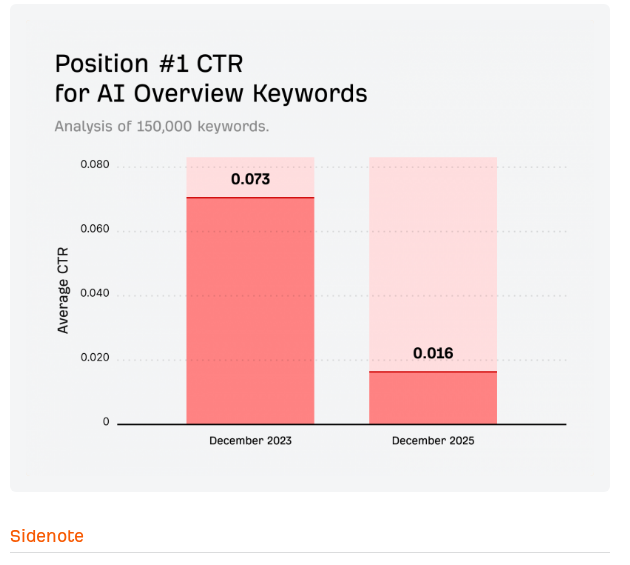
Ahrefs’ own measurement of the click-through-rate decline at each ranking position when an AI Overview is present. Source: Ahrefs, Dec 2025. Screenshot of the source page, captured 4 November 2026.
How an AI Overview changes click-through rate on the organic result below it
Multiple panels agree on direction, not exact size. Pew Research Center’s own study found that when a Google results page carries an AI summary, users click an external link 8% of the time, against 15% of the time when no summary appears (Pew Research Center, clicks on Google AI summaries, Jul 2025). The same study found users clicked a link inside the AI summary itself in just 1% of visits (Pew Research Center, clicks on Google AI summaries, Jul 2025).
Pew also found users ended their browsing session entirely on 26% of results pages that carried an AI summary, against 16% of pages with only traditional results (Pew Research Center, clicks on Google AI summaries, Jul 2025). The same study found Wikipedia, YouTube, and Reddit together account for 15% of the sources listed in Google’s AI summaries (Pew Research Center, clicks on Google AI summaries, Jul 2025).
Ahrefs’ own tracking of 300,000 keywords found the presence of an AI Overview correlates with a 58% lower average click-through rate for the top-ranking page, as of its December 2025 data, up from a 34.5% reduction in its own April 2025 study on the same panel (Ahrefs, AI Overviews reduce clicks, Dec 2025). Seer Interactive’s own September 2025 tracking found organic click-through rate on queries with an AI Overview fell 61%, from 1.76% to 0.61%, between June 2024 and September 2025 (Seer Interactive, AIO impact on Google CTR, September 2025 update, Sep 2025).
The same tracking found paid click-through rate on those same queries fell 68%, from 19.7% to 6.34%, over the same period (Seer Interactive, AIO impact on Google CTR, September 2025 update, Sep 2025). Notably, Seer also found organic click-through rate dropped 41% even on queries without an AI Overview present over the same window, a sign that some of the shift reflects changing search behavior broadly, not only the AI Overview itself (Seer Interactive, AIO impact on Google CTR, September 2025 update, Sep 2025).
Seer’s follow-up 2026 update found that when an AI Overview appeared and a brand was not cited in it, that brand’s organic click-through rate declined 67% over 2025, measured across 311 million impressions (Seer Interactive, AIO impact on Google CTR, 2026 update, 2026). The same update found organic click-through rate on AI Overview queries partly rebounded in early 2026, from 1.3% in December 2025 to 2.4% in February 2026 (Seer Interactive, AIO impact on Google CTR, 2026 update, 2026).
Being cited inside an AI Overview delivers 120% more organic clicks per impression than not being cited (Seer Interactive, AIO impact on Google CTR, 2026 update, 2026), though still 38% fewer clicks than a query with no AI Overview at all (Seer Interactive, AIO impact on Google CTR, 2026 update, 2026). Seer’s original September 2025 study also found brands cited in an AI Overview earn 35% more organic clicks than brands that are not cited (Seer Interactive, AIO impact on Google CTR, September 2025 update, Sep 2025), and 91% more paid clicks (Seer Interactive, AIO impact on Google CTR, September 2025 update, Sep 2025).
What share of AI-assisted searches end with no click at all
SparkToro’s own analysis of Similarweb clickstream data found 68.01% of US Google searches ended without a click in the first four months of 2026, up from 60.45% in 2024, a 7.5-percentage-point rise (SparkToro, less than one third of Google searches still send a click, 2026). On that same analysis, for every 1,000 US Google searches, only 232 clicks reach the open web (SparkToro, less than one third of Google searches still send a click, 2026). An earlier SparkToro and Datos study put the EU and US figures at 59.7% and 58.5% zero-click respectively (SparkToro and Datos, zero-click search study, 2024).
The same study found almost 30% of all clicks that do happen go to platforms Google itself owns, such as YouTube and Maps (SparkToro and Datos, zero-click search study, 2024). Among six markets SparkToro studied, the UK had the highest zero-click rate at 69.5% (SparkToro, zero-click searches by market, 2026), and Germany the lowest at 62.1% (SparkToro, zero-click searches by market, 2026).
iPullRank’s own analysis of 10.2 billion Google searches between October 2024 and December 2025 found 46.96% ended without a single click on an organic or paid result (iPullRank, what billions of Google searches reveal about zero-click behavior, 2026). Bain & Company’s own survey of 1,117 consumers, run with Dynata, found about 80% of consumers rely on an AI-powered summary to answer at least 40% of their searches without clicking to any destination site (Bain & Company, goodbye clicks, hello AI, Feb 2025). The same Bain survey found roughly 60% of searches on traditional search engines already end without the user reaching another site (Bain & Company, goodbye clicks, hello AI, Feb 2025).
What kind of content do AI answers cite?
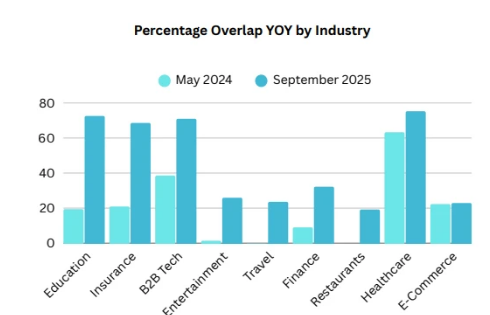
BrightEdge’s own data on how AI Overview citation overlap with the organic top 10 varies by industry. Source: BrightEdge, Sep 2025. Screenshot of the source page, captured 4 November 2026.
Which page and source characteristics get cited most
BrightEdge’s own tracked-query panel found 54.5% of AI Overview citations now come from pages that also rank organically, up from 32.3% sixteen months earlier (BrightEdge, rank overlap after 16 months of AIO, Sep 2025). That means the remaining 45.5% come from pages with no organic ranking at all for that query, on the same BrightEdge panel (BrightEdge, rank overlap after 16 months of AIO, Sep 2025). BrightEdge’s companion report put the share of AI Overview citations that also rank in the organic top 10 at about 17% (BrightEdge, AI Overviews at the one-year mark, Feb 2026), with the overlap ranging from 24% in Healthcare queries down to just 11% in Finance queries (BrightEdge, AI Overviews at the one-year mark, Feb 2026).
Ahrefs’ own study found only 37.9% of URLs cited in AI Overviews also appeared in the top 10 organic results for the same query as of March 2026, down from 76% in its own 2025 study (Ahrefs, AI Overview citations and the top 10, Mar 2026). Of the citations that don’t rank in Google’s top 100 at all, 18.2% are YouTube URLs (Ahrefs, AI Overview citations and the top 10, Mar 2026), which make up 5.6% of all AI Overview citations in Ahrefs’ panel overall (Ahrefs, AI Overview citations and the top 10, Mar 2026).
Ahrefs separately analyzed 900,000 new web pages and found 74.2% contain some AI-generated content (Ahrefs, what percentage of new content is AI-generated, Apr 2025), though only 2.5% are fully AI-generated without any human editing (Ahrefs, what percentage of new content is AI-generated, Apr 2025). In Orbit Media’s own survey of more than 1,000 marketers, every single content tactic tested beat the survey’s own benchmark for “strong results,” set at 14% of respondents in 2026 (Orbit Media and QuestionPro, marketer AI search survey, 2026). The highest-recommended tactic in that survey was FAQs and answer-focused content, recommended by 93% of respondents (Orbit Media and QuestionPro, marketer AI search survey, 2026).
How source diversity differs between Google AI Overviews and chatbot answers
Semrush’s own three-month study of 230,000 ChatGPT prompts found ChatGPT cited Reddit in close to 60% of prompt responses in early August 2025, before that share fell to around 10% by mid-September 2025 (Semrush, the most-cited domains in AI, 2025). Over the same window, Wikipedia’s appearance in ChatGPT responses dropped from roughly 55% to less than 20% (Semrush, the most-cited domains in AI, 2025). Similarweb’s own tracking found the presence of any citation at all in US ChatGPT prompts rose from about 1.6% in June 2025 to roughly 6.8% by May 2026, meaning most ChatGPT answers still cite no source directly even as the practice grows (Similarweb, AI search stats in 2026, 2026).
See which of your pages get cited by ChatGPT, Gemini, and Google AI Overviews with Sprout SEO’s free AI Insights capture. It fans out your queries, captures citations and entities, and tracks your brand against named competitors.
See who gets cited, right from your browser
Fans out your queries, captures AI Overview and chatbot citations, and tracks your brand against named competitors.
 Add to Chrome
Also available for Firefox
and Edge.

How many websites block AI crawlers?
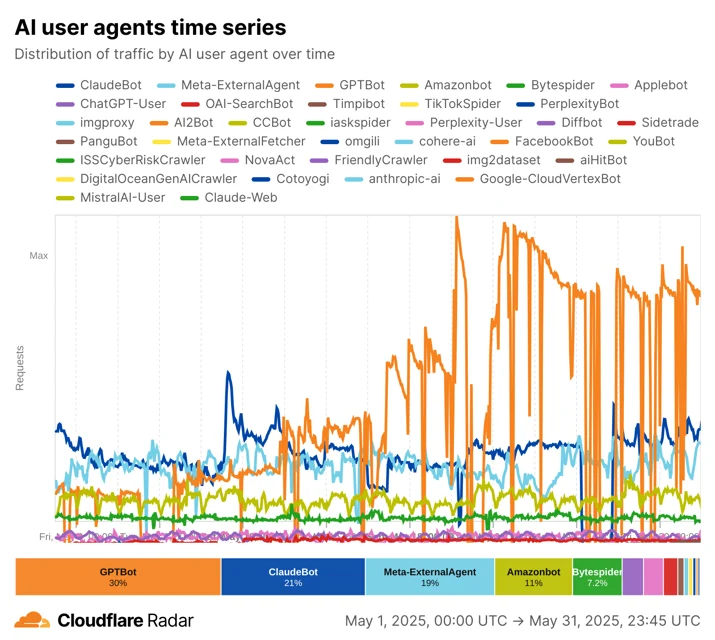
Cloudflare’s own measurement of AI crawler traffic growth over one year. Source: Cloudflare, May 2025. Chart published by the source, captured 4 November 2026.
What share of sites block the main AI training crawlers
Cloudflare’s own traffic data shows AI and search crawler traffic combined grew 18% from May 2024 to May 2025, comparing full-month periods (Cloudflare, from Googlebot to GPTBot, Jul 2025). The peak increase, 32% over the May 2024 baseline, occurred in April 2025, on the same Cloudflare data (Cloudflare, from Googlebot to GPTBot, Jul 2025). Within that total, GPTBot’s share of AI-crawler traffic surged from 5% to 30% over the year (Cloudflare, from Googlebot to GPTBot, Jul 2025).
OpenAI’s crawler traffic specifically rose 305% in requests over the same year (Cloudflare, from Googlebot to GPTBot, Jul 2025), taking GPTBot’s overall share of all crawler traffic from 2.2% to 7.7% (Cloudflare, from Googlebot to GPTBot, Jul 2025). ChatGPT-User, the crawler OpenAI uses for live retrieval rather than training, saw its own requests surge 2,825% over the same period, reaching a 1.3% share (Cloudflare, from Googlebot to GPTBot, Jul 2025). PerplexityBot recorded the fastest growth of any crawler Cloudflare tracked, a 157,490% increase in requests from a very small starting base, reaching a 0.2% share (Cloudflare, from Googlebot to GPTBot, Jul 2025).
Not every AI crawler grew. ClaudeBot’s share of total crawler traffic fell from 11.7% to 5.4%, a 46% drop in requests (Cloudflare, from Googlebot to GPTBot, Jul 2025). Bytespider, ByteDance’s crawler, collapsed from a 42% to a 7% share of AI-crawler traffic over the same year (Cloudflare, from Googlebot to GPTBot, Jul 2025).
For comparison, Googlebot remained the single largest crawler throughout the period and grew 96% in requests over the same year (Cloudflare, from Googlebot to GPTBot, Jul 2025). Bingbot’s share slipped slightly, from 10% to 8.7%, even as its raw request volume still grew about 2% (Cloudflare, from Googlebot to GPTBot, Jul 2025).
What share of sites block AI retrieval crawlers differently from training crawlers
Of the domains in the top 10,000 where Cloudflare could find a readable robots.txt file, 3,816 domains, 546 of them, about 14%, carried a rule specifically naming an AI bot as of June 2025, whether to fully or partially allow or disallow it (Cloudflare Radar data, cited in Cloudflare’s own blog, Jun 2025). Disallow rules vastly outnumber allow rules; an unnamed bot is allowed by default, so 14% understates how many sites made any deliberate AI-crawler decision (Cloudflare, from Googlebot to GPTBot, Jul 2025).
Originality. AI runs its own continuously updated dashboard tracking robots.txt blocking rates for named AI bots, including GPTBot, Google-Extended, and ByteSpider, across the top 1,000 websites; because the dashboard updates continuously, any figure pulled from it should be cited with the date it was checked, not treated as a fixed, one-time number (Originality. AI, AI bot blocking dashboard, Nov 2026).
Check which AI crawlers your robots.txt file allows or blocks with Sprout SEO’s free Robots.txt Checker, covering 35 crawler tokens across search, AI training, AI retrieval, and SEO-tool categories.
See crawler access, right from your browser
Checks robots.txt, meta robots, and your page's access for 14 named AI crawlers, instantly, on every page you visit.
Add to Chrome
Also available for Firefox
and Edge.
How many marketers now optimize for AI search?
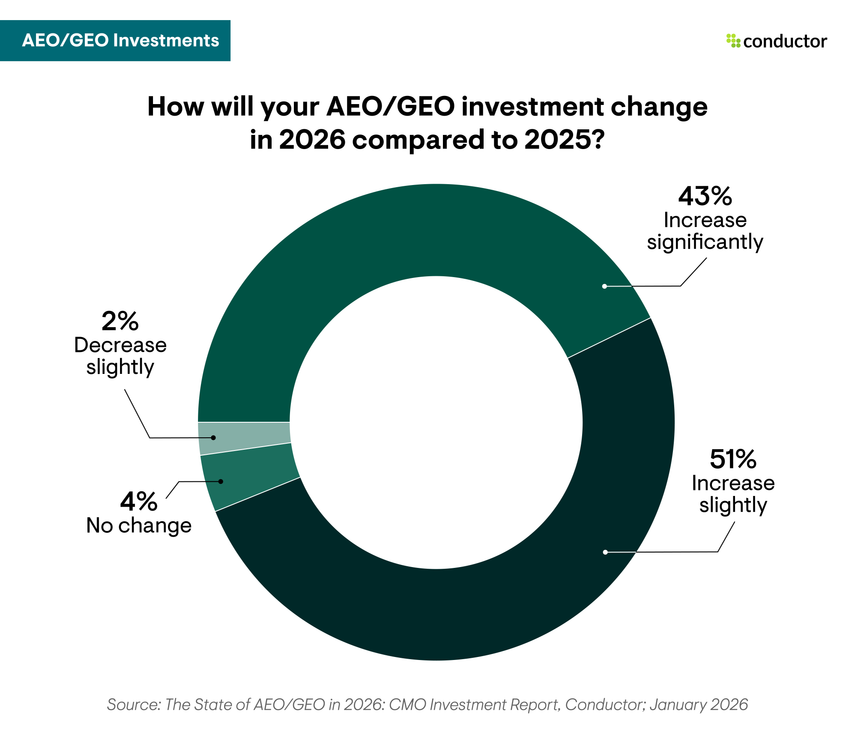
Conductor’s own survey data on CMO investment plans for answer-engine optimization in 2026. Source: Conductor, 2026. Chart published by the source, captured 4 November 2026.
This connects to SEO practice broadly: measuring AI-driven discovery alongside the search-ranking work practitioners already track.
What share of marketers and publishers track AI-search impact
IAB’s and Orbit Media’s own figures show usage running far ahead of measurement:
- 72% of AI-using respondents use AI tools at least weekly, and 40% use them daily (IAB, AI adoption and publisher impact study, 2026).
- 95% of the publishers IAB surveyed report a meaningful impact from AI-driven discovery on their business (IAB, AI adoption and publisher impact study, 2026).
- More than half, 57%, of active AI users say they often or always verify what an AI tool tells them, a sign that trust has not caught up with use (IAB, AI adoption and publisher impact study, 2026).
- 68% of marketing organizations are actively adapting their strategy in response to the shift to AI search (BrightEdge, survey on the AI search shift, Jun 2025).
- Only 57% of those marketers describe their own outlook as “cautiously optimistic” rather than confident, on the same BrightEdge survey (BrightEdge, survey on the AI search shift, Jun 2025).
- 34% of marketers say they do not track AI traffic at all, per Orbit Media’s own survey of more than 1,000 marketers (Orbit Media and QuestionPro, marketer AI search survey, 2026).
- Of that group who don’t track AI traffic, only 8% still report strong results from their content, evidence that not measuring a channel does not make it perform better (Orbit Media and QuestionPro, marketer AI search survey, 2026).
Where AI-search optimization sits in a marketing or SEO budget today
Conductor’s own CMO investment survey found 94% of enterprise CMOs and digital leaders plan to increase their answer-engine-optimization investment in 2026 (Conductor, 2026 state of AEO/GEO report, 2026). The same survey found those CMOs allocated an average of 12% of their digital budget to it in 2025 (Conductor, 2026 state of AEO/GEO report, 2026). In Orbit Media’s own survey, the single best-performing content tactic measured was publishing original data, with 24% of the marketers who do it reporting strong results (Orbit Media and QuestionPro, marketer AI search survey, 2026), nearly double the survey’s own 14% benchmark for a “strong result” (Orbit Media and QuestionPro, marketer AI search survey, 2026).
The same survey found 89% of respondents recommend structured data (schema markup) as a tactic, even though fewer report strong results from it than from original research or well-structured FAQs, a sign that the field has settled on a shared checklist of technical basics faster than it has agreed on what actually drives citations (Orbit Media and QuestionPro, marketer AI search survey, 2026). Adobe’s own March 2026 consumer survey found 39% of consumers have already used an AI assistant for online shopping (Adobe, AI traffic surge at retail sites, Mar 2026), and 85% of that group say it improved their shopping experience, a reminder that the GEO conversation is not only about organic content, but increasingly about commerce too (Adobe, AI traffic surge at retail sites, Mar 2026).
Where is AI search heading next?
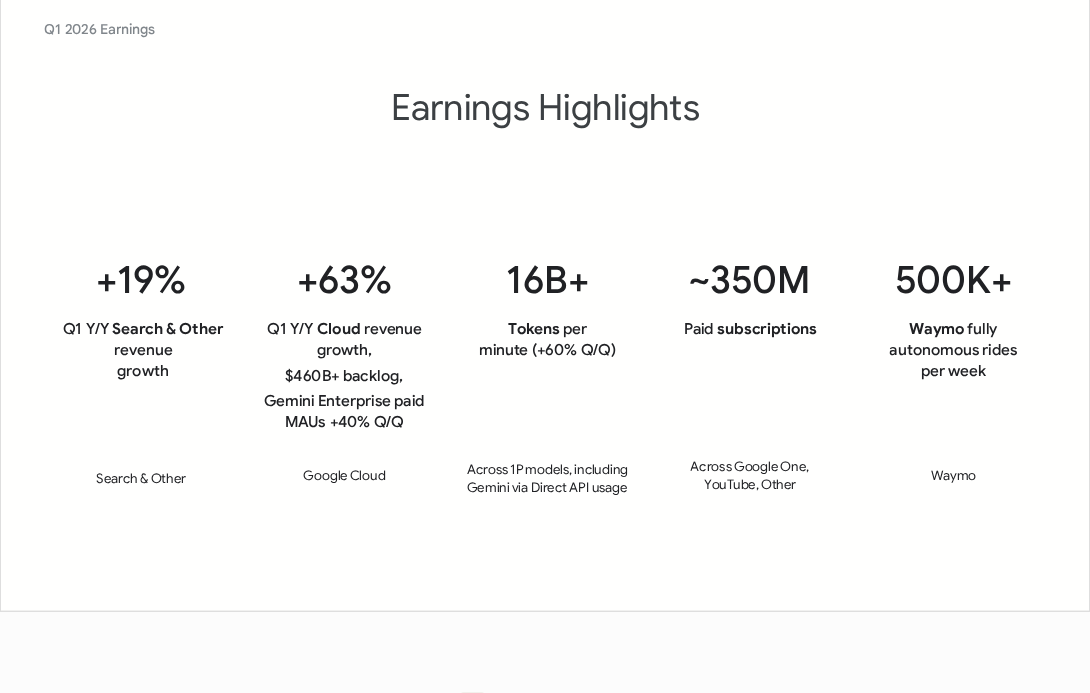
Alphabet’s own first quarter 2026 earnings materials, showing Search and other revenue growth (Alphabet, Q1 2026). Screenshot of the source page, captured 4 November 2026.
Alphabet’s own Q1 2026 earnings release reported Google Search and other revenue up 19% year over year, to $60.4 billion for the quarter ended March 31, 2026, a figure the company links explicitly to AI-driven experiences lifting query volume to an all-time high, not to a shrinking search business (Alphabet, Q1 2026 earnings release, Q1 2026). In Orbit Media’s own survey, the share of respondents who think AI chat tools will eventually replace traditional search engines actually fell, from 49% in 2025 to 46% in 2026 (Orbit Media and QuestionPro, AI vs Google survey, 2026). The same survey found the share who say they are unlikely to ever trust an AI chat tool rose from 32% to 36%, the largest attitudinal shift the survey measured in either direction (Orbit Media and QuestionPro, AI vs Google survey, 2026).
Plan around that combination for 2026 and 2027: rising AI use alongside rising skepticism, not search volume collapsing. Start measuring where your own content stands in AI answers, the way you already measure it in Google’s organic results.
Check these numbers on your own pages
Install Sprout SEO for Chrome, Firefox, or Edge. See AI Overview citations, crawler access, and on-page checks live as you browse.
Frequently asked questions
How many people use AI search engines?
User counts run from tens of millions in paying subscribers (ChatGPT’s 50 million-plus) to hundreds of millions in weekly actives (ChatGPT itself counts 900 million-plus) to more than a billion (Gemini, AI Overviews, Meta AI). Each company defines its own metric, so the figures are not directly comparable.
What percentage of Google searches trigger an AI Overview?
Measurements vary by panel: Pew’s March 2025 browsing study found 18% of Google searches returned an AI summary (58% of respondents saw at least one that month); Semrush’s keyword panel put appearance at roughly 15.69% as of November 2025; BrightEdge’s tracked-query panel put it at about 48% by February 2026.
Does an AI Overview reduce clicks to websites?
Yes, across every study reviewed here. Pew found 8% of users click an external link with an AI summary present, against 15% without one; Ahrefs found a 58% lower click-through rate for the top-ranking result; Seer found organic CTR on AI Overview queries fell 61% from June 2024 to September 2025.
Which AI chatbot sends the most referral traffic?
ChatGPT, by a wide margin: SE Ranking’s tracking of over 101,000 sites puts its share of AI referral traffic at 75.96% in 2026, down from 79.74% in 2025 as rivals grow; Conductor’s 2025 study of 13,770 domains put it even higher, at 87.4%.
What is generative engine optimization (GEO)?
GEO is the practice of structuring content so AI assistants and AI Overviews are more likely to cite it in their answers, the AI-era counterpart to traditional SEO. Conductor’s own survey found 94% of enterprise CMOs plan to increase their GEO investment in 2026, yet Orbit Media’s own survey found 34% of marketers still do not track AI traffic at all.
Do AI crawlers and search crawlers get blocked at the same rate?
No. Cloudflare’s data shows search crawlers like Googlebot are rarely blocked and keep growing traffic share, while AI crawlers see varied treatment: GPTBot grew 305% over a year even as 14% of sampled top-10,000 domains added an AI-bot robots.txt rule, and Bytespider’s share collapsed over the same period.
How often do AI Overview citations overlap with Google’s top 10 results?
Less than half, and the overlap is shrinking. Ahrefs found only 37.9% of AI Overview citations also ranked in the top 10 as of March 2026, down from 76% in its own 2025 study; BrightEdge separately put organic overlap at about 17%, ranging from 24% in Healthcare queries to just 11% in Finance queries.
Methodology
Every statistic here is drawn from the organisation that produced it: a company’s own blog, newsroom, investor filing, or earnings call, or a research firm’s own survey or tracked-panel study, never a statistics roundup or another site’s “statistics” page. Each source URL was opened and checked during research; at least one figure first found through a secondary source was corrected after the primary document did not state that number. Dates reflect when the source collected or published the data; a continuously updated dashboard is noted as such, so its figure is current to the date checked, not permanent.
Sources
- OpenAI, Scaling AI for everyone
- Google, Gemini app hits 1 billion monthly active users
- Google, new controls for website owners
- Google (Alphabet), Q2 2026 earnings remarks
- Google (Alphabet), Q2 2025 earnings remarks
- Alphabet, Q1 2026 earnings release
- Microsoft, FY26 Q1 earnings conference call
- Microsoft, FY26 Q3 earnings conference call
- Meta Platforms, Q3 2025 earnings call transcript
- Pew Research Center, metered-data AI report
- Pew Research Center, clicks on Google AI summaries
- Pew Research Center, Americans and AI 2026
- Ahrefs, AI Overviews reduce clicks
- Ahrefs, AI Overview citations and the top 10
- Ahrefs, what percentage of new content is AI-generated
- Seer Interactive, AIO impact on Google CTR, September 2025 update
- Seer Interactive, AIO impact on Google CTR, 2026 update
- BrightEdge, rank overlap after 16 months of AIO
- BrightEdge, AI Overviews at the one-year mark
- BrightEdge, survey on the AI search shift
- BrightEdge, AI shopping skyrockets
- Semrush, AI Overviews study
- Semrush, ads on AI Overview SERPs
- Semrush, the most-cited domains in AI
- Cloudflare, from Googlebot to GPTBot
- Originality. AI, AI bot blocking dashboard
- SE Ranking, ChatGPT referral traffic report
- Similarweb, AI search stats in 2026
- Similarweb, AI referral traffic by industry
- Search Engine Land, reporting Conductor’s AI traffic data
- Adobe Digital Insights, Q3 AI traffic trends report
- Adobe, AI traffic surge at retail sites
- SparkToro, less than one third of Google searches still send a click
- SparkToro and Datos, zero-click search study
- SparkToro, zero-click searches by market
- SparkToro, new research on US AI tool adoption
- iPullRank, what billions of Google searches reveal about zero-click behavior
- Bain & Company, goodbye clicks, hello AI
- IAB, AI adoption and publisher impact study
- Conductor, 2026 state of AEO/GEO report
- Orbit Media and QuestionPro, AI vs Google survey
- Orbit Media and QuestionPro, marketer AI search survey